Guides · 8 min read
How to Build a School Schedule Without Conflicts

Building a school schedule often becomes an endurance test when administrators need to balance course loads, teacher availability, classroom usage, classes, labs, and last-minute changes. That’s why understanding how to build a school schedule in an organized way isn’t just an administrative task. It’s a decision that affects the entire institution’s routine, from student learning to the time staff spend firefighting problems.
The problem is that many schools still treat the schedule as an isolated puzzle, assembled in spreadsheets, scattered messages, and different versions of the same file. It works to a point. Then scheduling conflicts begin, rooms get double-booked, teachers are allocated to two places at once, and the feeling sets in that any small adjustment creates a domino effect.
How to build a school schedule with operational logic
The best way to build a schedule doesn’t start with distributing classes throughout the week. It starts with diagnosing the rules the school actually needs to respect. Without this, the schedule may look complete on paper but remains fragile in practice.
Before placing any class, administrators need to gather four blocks of information: curriculum matrix for each grade level, course load per subject, teacher availability, and physical space capacity. It seems basic, but this is exactly where many errors arise. When this data is incomplete or scattered, the schedule is compromised from the start.
It’s also worth separating hard constraints from preferences. A hard constraint is, for example, a lab available only during certain periods or a teacher who works at more than one campus. A preference is trying to concentrate certain classes on specific days or avoiding long gaps for a class. When the school mixes these two priority levels, scheduling becomes slower and conflicts increase.
What to define before distributing time slots
The school schedule needs to answer a simple question: what resources exist and how can they be used without overlap? Resources here aren’t just teachers. They’re classrooms, gyms, labs, equipment, and even assessment periods and staff meetings.
A good process starts by defining the base structure. This includes how many school days make up the week, how many periods exist per session, what the duration of each class is, and which breaks need to be preserved. If the school serves elementary, middle, and high school students, for example, there may be different rules across grade levels. Forcing a single model for everyone isn’t always the best approach.
Next comes the pedagogical reading of the schedule. It doesn’t always make sense to place subjects requiring greater cognitive demand in the last period. In other cases, concentrating classes of the same subject on the same day may facilitate operations but harm learning. This is where the balance between administrative efficiency and academic quality comes in.
This is an important point: there’s no perfect schedule in absolute terms. There’s the most viable schedule for the school’s reality at that moment. In some institutions, the main challenge is physical space. In others, it’s sharing teachers between classes or campuses. Knowing where the main constraint lies helps make better decisions.
Practical steps to build the school schedule
In practice, the safest path is to start with what has the least flexibility. First, allocate teachers with restricted availability, special facilities, and subjects requiring specific infrastructure. Lab classes, physical education in shared gyms, and courses with teachers who work at more than one school need to enter the planning early.
Next, distribute subjects with the highest course loads. They occupy more space in the week and, if left to the end, tend to generate poor fits. Only after that should you fill remaining periods with subjects of lower frequency.
Throughout the scheduling process, administrators should constantly validate three points: that teachers aren’t double-booked, that classes maintain a healthy sequence, and that physical space is available. This continuous monitoring prevents rework. Waiting until the schedule is complete to look for conflicts usually costs more time.
Another important consideration is to plan room for adjustments. Overly rigid schedules seem efficient at first but suffer more when there’s a staff change, class size increase, or calendar revision. Whenever possible, maintaining some flexible slots helps the school respond without dismantling everything.
Common mistakes in building the schedule
A frequent mistake is building the schedule thinking only about teacher and class, without considering room and resource. The result appears quickly: class scheduled, teacher available, but lab occupied or equipment unavailable. In real practice, this becomes improvisation.
Another mistake is centralizing the entire process in a single person, without visibility for others involved. When administration, coordinators, and teachers access different information, conflicting interpretations of the official schedule emerge. This increases the chance of unrecorded changes and communication failures.
Parallel controls also weigh heavily. One version of the schedule in the spreadsheet, another in the message group, another printed in the teachers’ lounge. The more sources, the less trust in the information. In school management, real-time visibility isn’t a luxury. It’s what reduces operational noise.
How to build a school schedule in schools with many variables
When the school has multiple campuses, many shared teachers, or intensive use of common spaces, complexity grows quickly. In these cases, trying to solve everything manually almost always generates slowness and little predictability.
The solution isn’t just to digitize the schedule. It’s to centralize the operational logic. The school needs to see in a single environment who’s allocated, where each class takes place, which resources have been reserved, and which conflicts emerge before the week begins. This type of view reduces simple failures that typically consume hours of staff time.
For multi-campus institutions or those with high turnover, the schedule also needs to communicate with the calendar, exams, assignments, and space reservations. When these fronts remain separate, a change in one isn’t reflected in the others. Then the school wastes time manually checking what should already be synchronized.
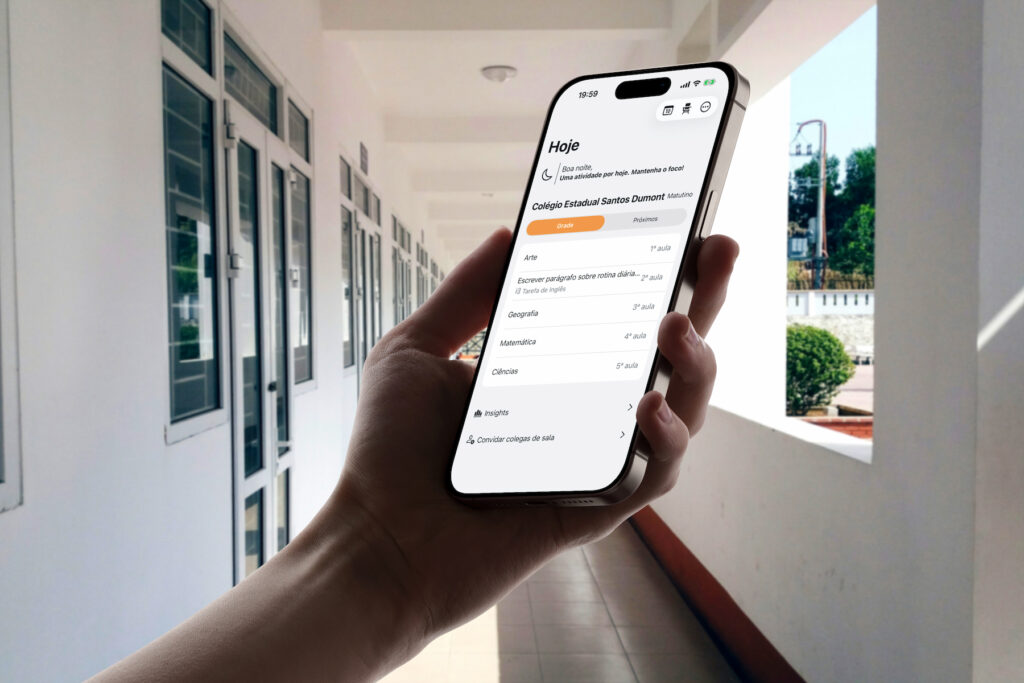
This is the scenario where a practical platform makes a difference. Solutions like Agenda1 help bring together class schedules, room and equipment reservations, academic calendar, and routine monitoring in a single place. The gain isn’t just in screen organization. It’s in reducing conflicts, speeding up adjustments, and the fact that teachers, students, and administrators access the same information.
The role of technology in building the schedule
Technology doesn’t replace the pedagogical judgment of coordinators. What it does is eliminate part of the repetitive effort and provide more control over variables that were previously scattered. This significantly changes the team’s work.
Instead of spending energy validating whether there’s a room conflict or time overlap, administrators can focus on what really matters: balanced distribution, quality of academic routine, and clear communication with the entire school community. Additionally, when the schedule can be consulted through an app or browser, dependence on printouts and manual handoffs decreases.
Another concrete benefit is more agile updating. Every school goes through adjustments during the school year. A teacher whose availability changes, an event that occupies physical space, a class that requires reorganization. When the schedule is centralized, these changes become simpler to implement and communicate.
How to know if the schedule turned out well
A well-built schedule isn’t just one that closes without technical conflicts. It needs to work day to day. Therefore, after the initial build, it’s worth testing the schedule’s quality with some objective questions.
Can teachers meet their schedules without impractical travel? Do classes have a balanced distribution of subjects throughout the week? Did the most contested spaces become overloaded during certain periods? Are there many gaps that affect routine or increase downtime?
If the answer is yes to several of these points, the schedule can still improve. This is a refinement process. In many schools, the first version won’t be final, and that’s okay. What’s important is that adjustments occur with criteria and reliable data, not on an emergency basis.
It also helps to track simple indicators after implementation. Frequency of reassignments, number of room conflicts, delays due to miscommunication, and time spent updating schedules show whether operations are flowing better or not. When the school measures this impact, it becomes easier to justify process changes.
The school schedule as a management tool
The schedule shouldn’t be seen only as a timetable. It organizes the school’s occupancy, guides teaching work, gives predictability to students, and supports coordination decisions. When it’s poorly built, the problem doesn’t stay confined to planning. It shows up in team morale, inefficient use of resources, and lost time with constant corrections.
Therefore, those seeking how to build a school schedule more efficiently need to think beyond fitting classes. It’s necessary to create a clear process, with defined rules, updated data, and shared visibility. The less improvisation the school needs to keep routine functioning, the more space it has to care for what really matters: teaching well and operating smoothly.
If your school still builds the schedule as if every adjustment were a crisis, perhaps the problem isn’t with the team. It might be with the method. And a good method is one that simplifies routine from the first period on Monday morning.