Guides · 8 min read
Conflict-Free School Exam Schedule

When a school exam schedule relies on scattered reminders, separate spreadsheets, and last-minute decisions, the results usually appear quickly: student overload, teacher miscommunication, and administrators putting out fires that could have been prevented. It’s not a matter of effort. It’s a matter of visibility and organization.
In many schools, the assessment calendar may exist, but it doesn’t function as an integrated operation. One teacher schedules an exam without knowing another class already has an assessment on the same day. Administration discovers too late that there aren’t enough rooms available. Students receive information through different channels and lack clarity about deadlines, content, and changes. Gradually, the academic routine loses predictability.
What a school exam schedule needs to solve
An effective school exam schedule doesn’t just serve to “write down dates.” It needs to balance three fronts simultaneously: pedagogical distribution, operational viability, and communication with those participating in the routine. If one of these parts fails, the calendar becomes just another source of noise.
From a pedagogical standpoint, the school needs to avoid excessive concentration of exams in just a few days, especially in classes with high course loads. From an operational standpoint, it’s necessary to see rooms, equipment, class schedules, and teacher availability. And in communication, the essential thing is that everyone consults the same information, in the same version, without depending on parallel messages.
This is the point where many institutions realize that the problem isn’t only in building the schedule, but in the lack of a single environment to track what was defined, adjust what changed, and reduce conflicts before they happen.
Why the manual model frequently fails
Manual management might work in a small school with low complexity, but it usually starts to fail when the routine grows. It only takes more classes, more teachers, more shifts, or more than one campus for the chance of schedule conflicts to increase.
The main risk is in fragmentation. Part of the information stays in one file, another in a message group, another with administration, and another with the teacher. When someone changes a date, the update doesn’t always reach everyone. This generates rework, insecurity, and internal strain.
There’s also a less visible cost: the time spent checking what’s already scheduled. Coordinators and offices end up assuming a role of constant verification, reviewing calendars, checking availability, and answering repeated questions. It’s operational work that consumes energy from a team that should be focused on more strategic decisions.
How to build a school exam schedule that works day-to-day
In practice, a school exam schedule needs to be born from clear criteria, not just open dates on the calendar. The first step is to define distribution rules. How many assessments can the same class have per day? Is there a minimum interval between higher-weight exams? What about makeup exams and remedial testing? Without this agreement, each scheduling becomes an isolated case.
Next comes the schedule view. Before confirming dates, the school needs to cross-reference the exam calendar with classes, events, holidays, space usage, and extracurricular activities. This care avoids the common mistake of scheduling an assessment on a day that seems free but is already committed by another academic or logistical demand.
The third point is to give autonomy with control. Teachers need to be able to view the schedule and participate in the process without depending on a long approval chain for each simple adjustment. At the same time, administration needs to maintain standardized criteria, monitoring conflicts, assessment concentration, and resource usage. It’s an important balance: total freedom generates disorganization; excessive centralization stalls the routine.
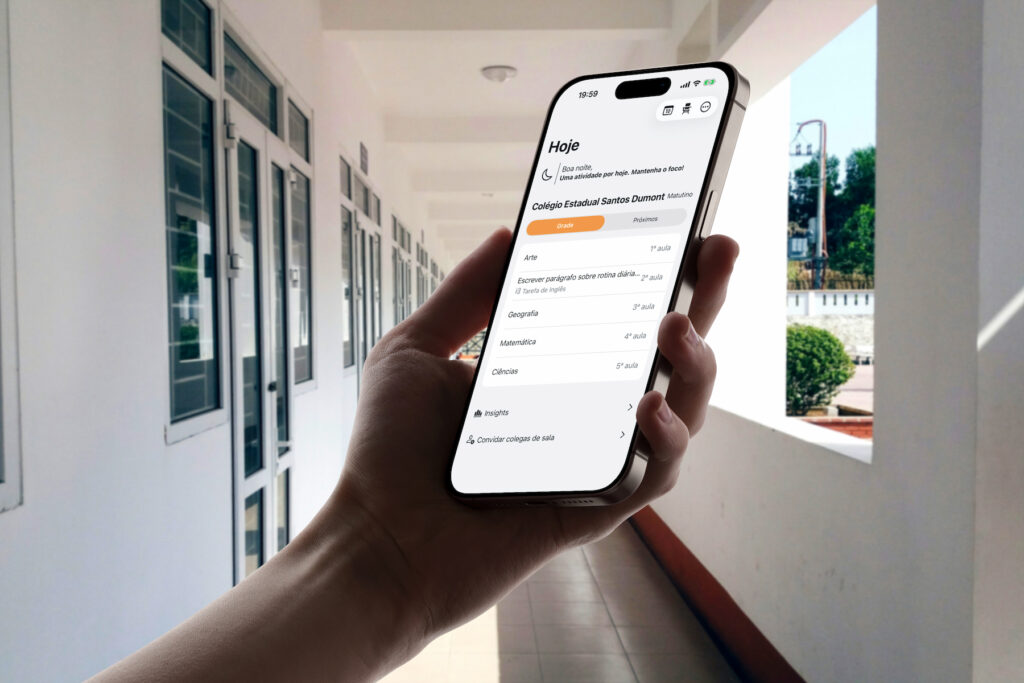
Finally, communication can’t only enter at the end. When the school treats student notification as the last step, it opens space for noise. The ideal is for information to be born in an environment that’s consultable, updated, and easy to access by app and browser.
What’s worth defining before the exam period
Some advance decisions make a real difference. The school gains predictability when it establishes assessment windows by grade level, criteria for rescheduling, those responsible for approving changes, and minimum advance notice for publishing dates.
It also helps to separate what is an exam, assignment, presentation, and ongoing assessment activity. When everything enters the same flow without distinction, the schedule loses value as a monitoring tool. Students need to understand what requires more intense preparation, and administration needs to see the weight of each entry to evaluate balance between subjects.
The benefits of centralizing the schedule in one place
Centralizing the schedule isn’t just digitizing what was already done on paper or in spreadsheets. The main change is in transforming dispersed information into visible routine. When teachers, administration, and students consult the same database, the school reduces different interpretations about the same date.
For administration, this means less time manually reconciling schedules and more capacity to act before the problem. For teachers, it represents clarity about what’s already scheduled for each class. For students, it reduces the feeling of surprise and improves study organization.
There’s also an operational benefit that’s usually underestimated: the relationship between the exam calendar and physical resources. In many institutions, the difficulty isn’t only in scheduling the assessment, but in guaranteeing a room, laboratory, equipment, or class reorganization at that time. When the academic schedule talks to the operational schedule, the school stops treating these themes as separate processes.
School exam schedule and student experience
Internal organization directly affects student experience. When assessments are poorly distributed or change without clarity, the perception of disorganization grows. This impacts anxiety, preparation, and even engagement with the school routine.
A well-structured school exam schedule helps students plan study, assignments, and reviews in advance. It seems simple, but this type of predictability improves the relationship with the academic calendar. Students stop depending on informal notices and gain a reliable reference.
This also benefits teachers. Instead of answering the same question several times about date, content, and schedule changes, teachers work with a clearer flow. The time saved returns to what really matters: pedagogical support.
What to look for when choosing a digital solution
Not every tool solves the complete problem. Some organize dates but don’t talk to rooms, equipment, class schedules, and institutional calendars. Others even offer many features but require an operation that’s too complex for quick school adoption.
To truly work, the solution needs to be simple for the user base and useful for administration. This means easy access for teachers and students, clear schedule visualization, and an administrative layer capable of centralizing calendars, monitoring conflicts, and organizing school operations without complicating implementation.
It’s also worth considering the adoption pace. If the tool requires long training or depends on advanced technical use, part of the team may return to old shortcuts. In schools, practicality weighs heavily. The best system isn’t always the one that promises most. It’s the one that can enter the routine without unnecessary friction.
In this scenario, platforms like Agenda1 make sense because they bring together academic schedules, operational resources, and simple access in the same environment. For the school, this reduces fragmentation. For teachers and students, it facilitates use from the start.
When the school grows, the problem grows with it
In institutions with multiple campuses, grade levels, or shifts, the schedule tends to become more sensitive. An adjustment in one class can impact a shared teacher, space reservation, and another campus’s calendar. What used to be manageable by memory or quick message exchange no longer scales.
That’s why the school exam schedule needs to be thought of as part of institutional management, not as an isolated task of pedagogical coordination. When the assessment calendar enters the same organizational logic as classes, resources, and events, the school gains real control over the routine.
This doesn’t mean rigidifying the work. Changes will continue to happen, because school life is dynamic. The difference is in being able to make adjustments with traceability, criteria, and clear communication.
The real gain isn’t just organizing exams
The biggest result of a well-managed schedule doesn’t only appear on the screen. It appears in the school’s functioning. Fewer date conflicts, less rework, less improvisation, and more trust in the information that circulates.
For administrators, this represents a more complete view of operations. For coordinators, less manual effort. For teachers, more clarity in planning. For students, a more predictable routine. And when information is centralized, the school creates a better foundation to grow without multiplying simple problems.
If your institution still organizes assessments in a fragmented way, it’s worth looking at the schedule not as an administrative detail, but as a central piece of the academic routine. Starting with this adjustment usually brings a quick practical effect: when everyone sees the same calendar, the entire school works better.